

Published by the Travel Club Navigator Group editorial team.
For many travelers, the dream of "owning" a vacation is often clouded by confusing industry terminology. When you're weighing your options, the difference between a timeshare and a travel club isn't just semantics — it's a fundamental difference in how you spend your time, your money, and your freedom. At Travel Club Navigator Group, we believe in clarity. Here's the breakdown of these two models so you can decide which — if either — fits your lifestyle.
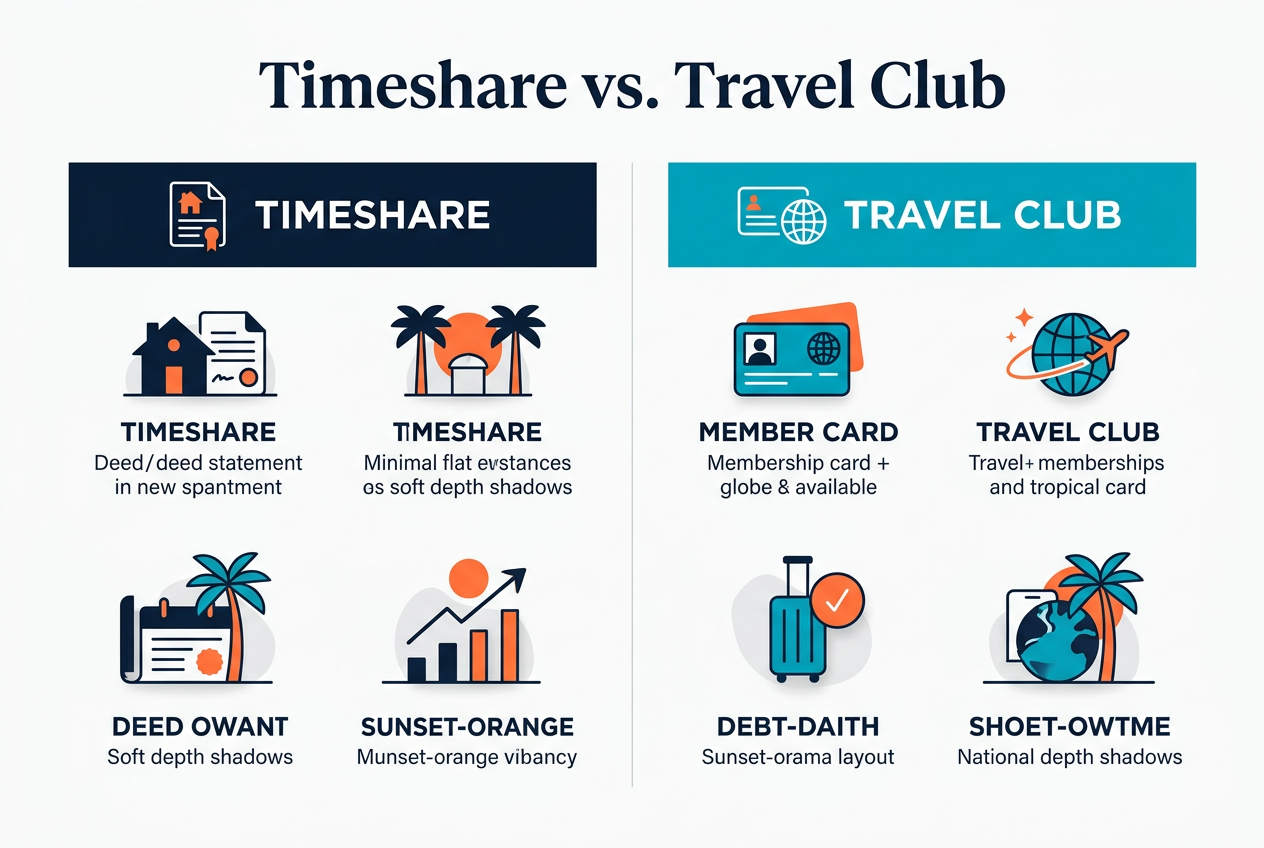
The Traditional Timeshare: "Owning Your Time"
A timeshare is essentially a form of vacation property co-ownership. When you purchase one, you're often buying the right to use a specific property for a set period each year — usually one week.
- Ownership Structure: Often deeded, meaning you hold a share of the property.
- The Model: Traditionally "fixed-week" (same time, same place) or "floating-week" (a range of dates within a season).
- The Reality: It offers predictability but lacks flexibility. Life changes and families grow, yet the annual maintenance fee typically remains — whether you travel that year or not.
The Travel Club: "Paying for Access"
Think of a travel club as a modernized membership model. Instead of owning real estate, you're paying for the privilege of accessing a network of resorts, hotels, and travel experiences.
- Ownership Structure: None. You are a member, not an owner.
- The Model: Usually points-based. You purchase "currency" to spend on accommodations within the club's portfolio.
- The Reality: The primary benefit is flexibility. But "flexible" doesn't always mean "unrestricted" — you're still subject to blackout dates, availability, and ongoing annual dues.
Comparison at a Glance
Here's how the two models stack up side by side.
| Feature | Traditional Timeshare | Travel / Vacation Club |
|---|---|---|
| Primary Goal | Property usage rights | Membership access |
| Flexibility | Low (Fixed / Floating weeks) | High (Points-based) |
| Commitment | Often perpetual / long-term | Membership-based (variable) |
| Key Cost | Upfront price + Annual fees | Initiation fee + Annual dues |
The "Navigator" Take: What to Watch Out For
Regardless of which label is on the contract, both models share similar risks:
- Hard to Exit: Both can involve complex contracts, transfer restrictions, and aggressive enforcement of fees.
- Hidden Costs: Beyond the initial "buy-in," members often face rising maintenance or service fees that increase annually.
- The Illusion of Freedom: While clubs market "anytime" travel, booking is always subject to inventory and the competing schedules of thousands of members.
Are you always in control? Whether you're in a contract or just starting your research, remember: you are the navigator of your own travel journey. If a product doesn't provide the freedom it promises, it's your right to seek clarity and demand transparency.
Need help deconstructing a contract or planning your next move?
Explore our Member Guides or reach out to learn how to manage your membership like a professional.
Contact Our TeamMore in our Member Success series: "The First 45 Days — A Roadmap for New Members."